Ceramic window tint in Adelaide
Every film we fit is genuine nano-ceramic, the construction that rejects real heat, keeps your signal, and stays clear for years. Here is why ceramic beats dyed and metallic, and how the four tiers stack up.
What ceramic tint is, and why it wins
Ceramic window tint in Adelaide with Tint Bros starts from $345 and ranges up to $745, depending on the film tier and your vehicle's make, model, and year. Every tier is a true nano-ceramic film, so the difference between them is how much infrared heat they reject, from 55% up to 97%.
Ceramic uses nano-ceramic particles rather than dye or metal. That is what lets it block significantly more heat and UV than standard dyed or metallised films while never interfering with your GPS, keyless entry, radio, or phone. It is clearer, colour-stable, and longer-lasting, which is exactly why we fit ceramic across our window tinting range and nothing less.
Ceramic vs dyed vs metallic
Three ways to build a window film. Only one rejects real heat, keeps your signal, and stays clear. Tap a construction on mobile to compare.
Ceramic film
What we fitNano-ceramic particles reject heat and UV with no metal, no signal drop, and no fade. The film we fit across every tier.
- Strong:Infrared heat rejectionRejects up to 97% of infrared heat on our top tier.
- Strong:UV protectionBlocks harmful UV to protect skin and interior.
- Strong:Signal-safe (GPS, keyless, phone)Non-metallic, so it never interferes with signal.
- Strong:Colour stabilityColour-stable, stays true with no purpling.
- Strong:Optical clarityOptically clear, so the view out stays sharp.
- Strong:LongevityLongest-lasting, backed by a manufacturer warranty.
Dyed film
The cheapest, oldest construction. Blocks light, not much heat.
- Weak:Infrared heat rejectionBlocks visible light, but little radiant heat.
- Mixed:UV protectionSome UV block that weakens as the dye breaks down.
- Strong:Signal-safe (GPS, keyless, phone)No metal layer, so no signal interference.
- Weak:Colour stabilityFades and turns purple with age.
- Mixed:Optical clarityCan look flat or hazy from inside.
- Weak:LongevityThe first film to fade, bubble, and peel.
Metallic film
Reflects heat with a metal layer, at the cost of your signal.
- Strong:Infrared heat rejectionReflects a good amount of radiant heat.
- Strong:UV protectionStrong UV block from the metallised layer.
- Weak:Signal-safe (GPS, keyless, phone)Metal interferes with GPS, keyless entry, and phone signal.
- Mixed:Colour stabilityHolds colour, but carries a mirror-like sheen.
- Mixed:Optical clarityReflective, mirrored appearance from outside.
- Mixed:LongevityLasts, but can corrode at the cut edges.
Ceramic film
What we fitNano-ceramic particles reject heat and UV with no metal, no signal drop, and no fade. The film we fit across every tier.
- Strong:Infrared heat rejectionRejects up to 97% of infrared heat on our top tier.
- Strong:UV protectionBlocks harmful UV to protect skin and interior.
- Strong:Signal-safe (GPS, keyless, phone)Non-metallic, so it never interferes with signal.
- Strong:Colour stabilityColour-stable, stays true with no purpling.
- Strong:Optical clarityOptically clear, so the view out stays sharp.
- Strong:LongevityLongest-lasting, backed by a manufacturer warranty.
Four tiers, measured by the heat they reject
Every tier is genuine nano-ceramic. What separates them is infrared rejection, how much radiant heat stays out of your cabin. Prices run from $345 to $745. Pick a rung to read the full film.
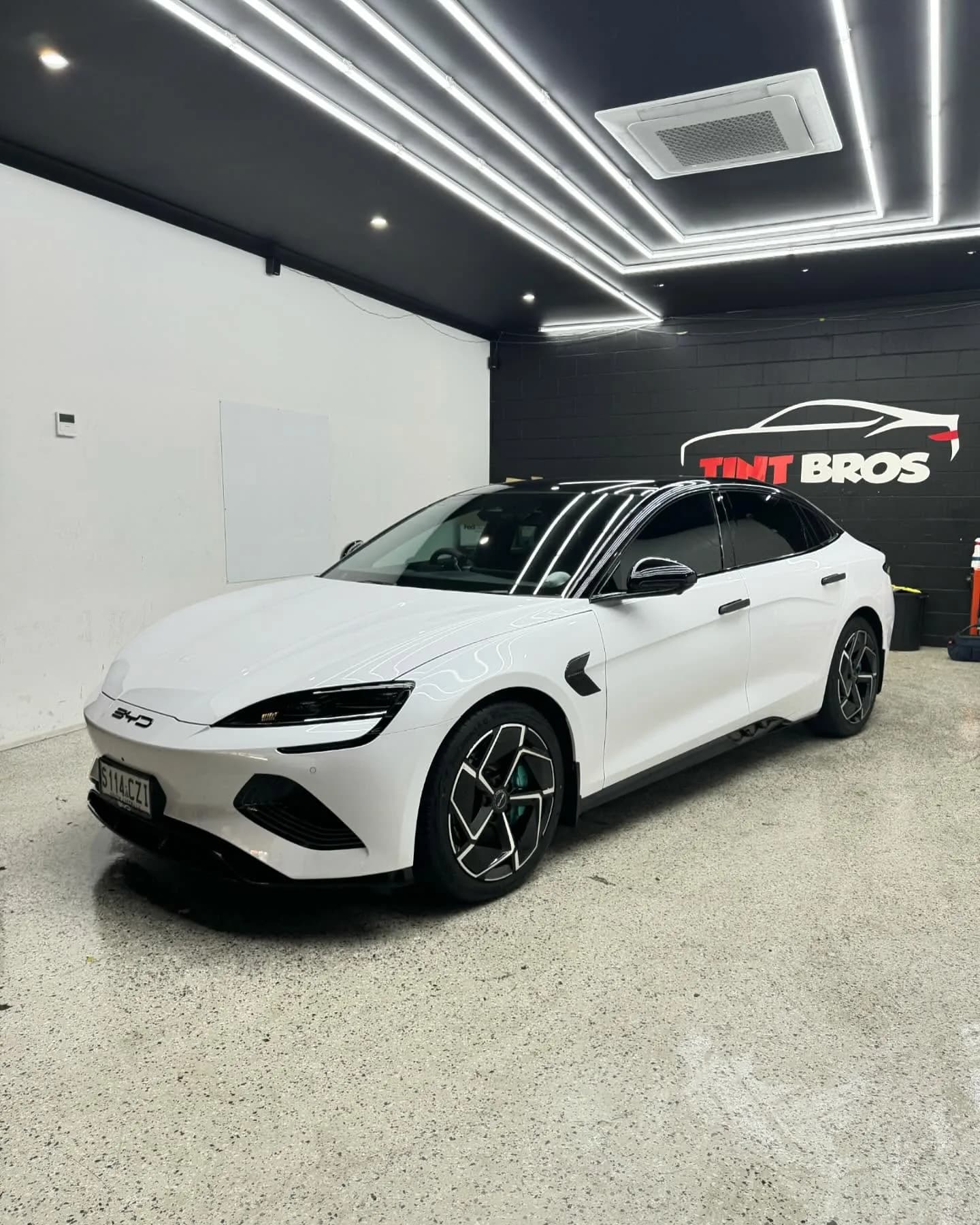
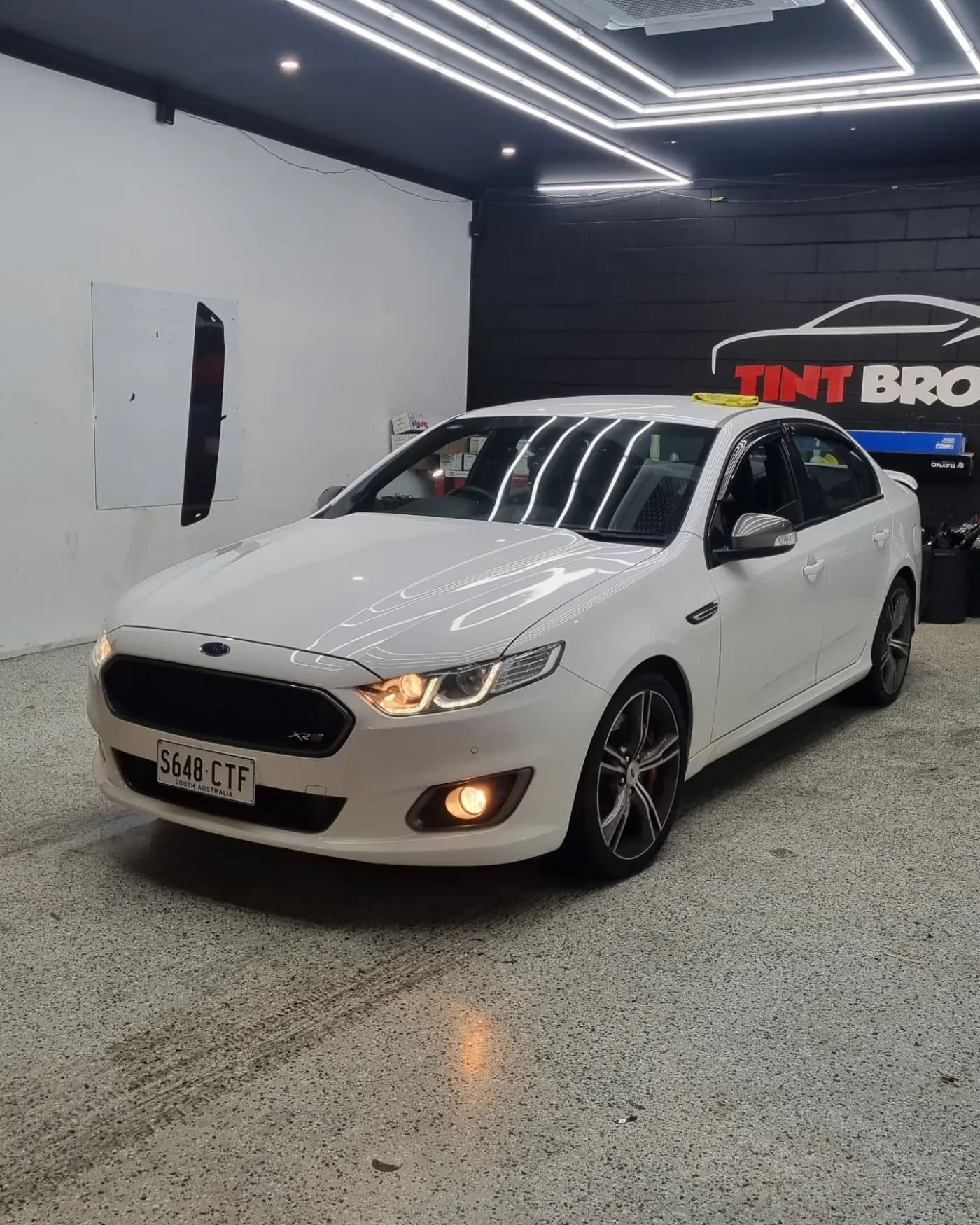
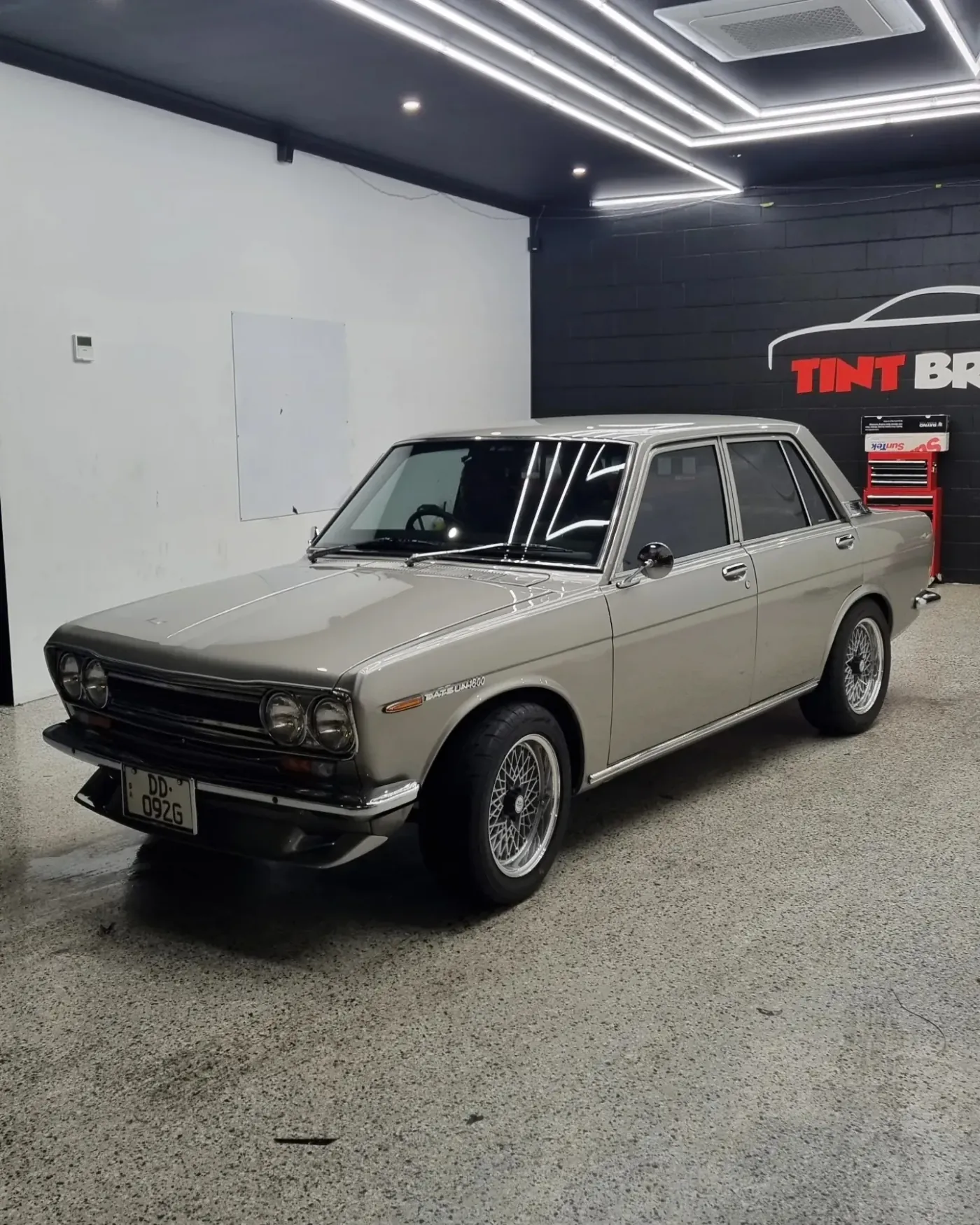
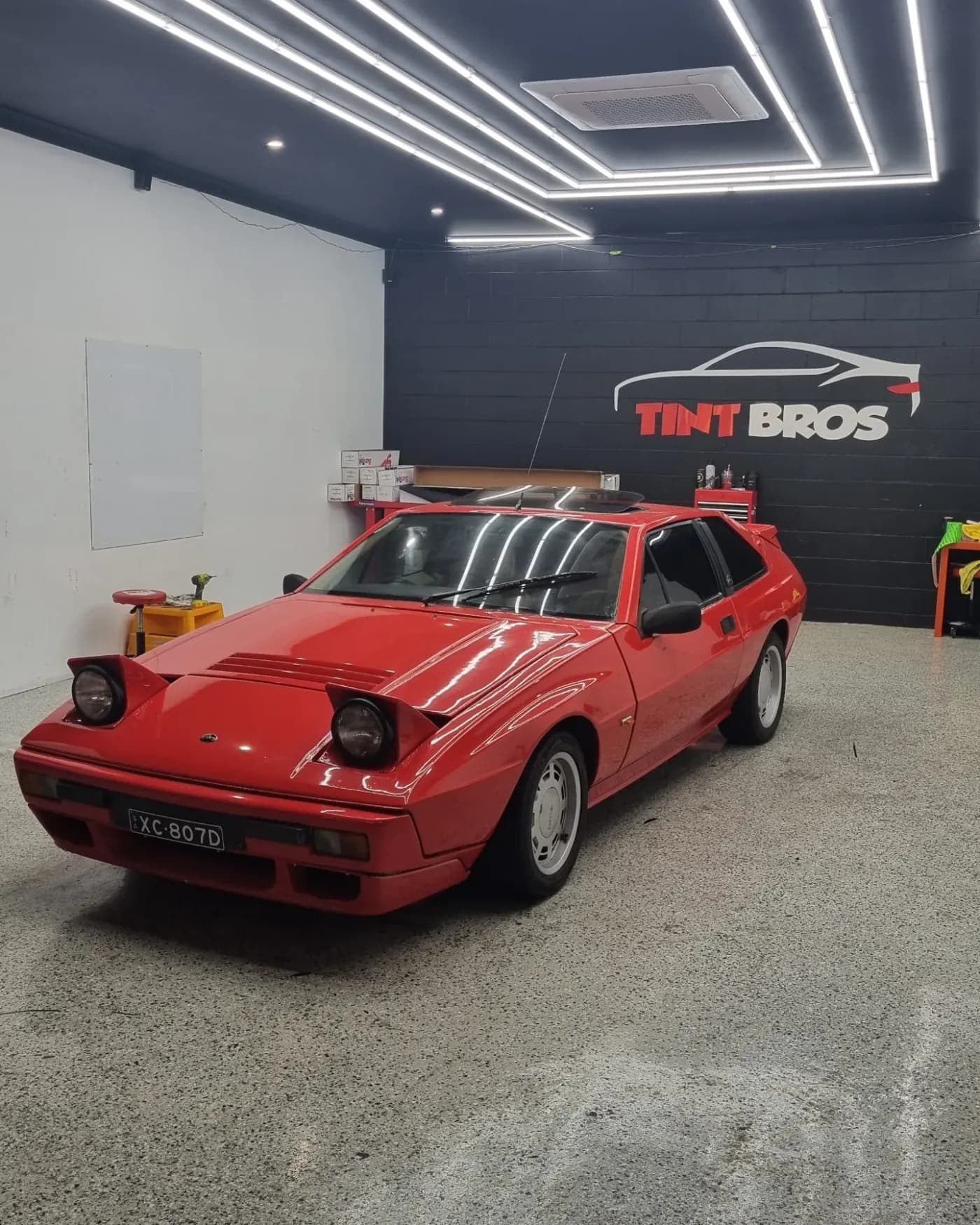
Ceramic tint on real Adelaide cars
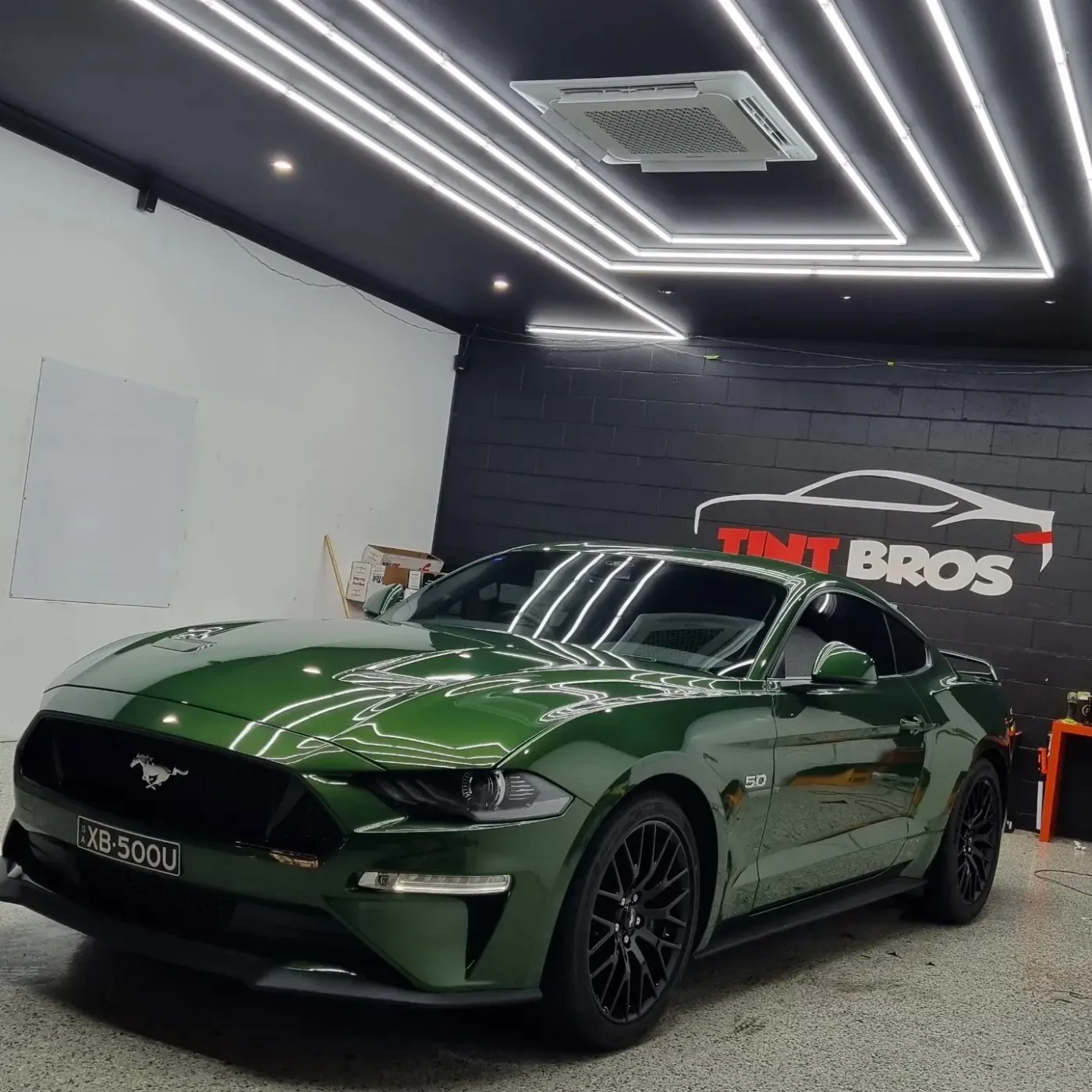
Every car here is a genuine Tint Bros install, photographed on the bay floor.
What the ceramic layer actually buys you
More heat, less oven
Nano-ceramic particles reject infrared heat instead of just darkening the glass, so the cabin the air conditioning has to catch up with is a cooler one.
Signal-safe by design
There is no metal layer, so ceramic never interferes with GPS, keyless entry, tyre-pressure sensors, digital radio, or your phone.
Optically clear
The view out stays sharp rather than hazy or mirrored, and a range of VLT shades keeps night visibility where South Australian rules want it.
Colour-stable for years
Ceramic holds its colour and will not fade or turn purple the way old dyed films do, backed by a manufacturer warranty for the life of the film.
Read the film that fits your car
Ceramic tint questions
Ceramic tints use nano-ceramic particles to block significantly more heat and UV than standard dyed or metallised films, without interfering with radio, GPS, or mobile signals. They're clearer, longer-lasting, and far more comfortable, which is why we fit ceramic film across all of our tiers.
Window tinting in Adelaide with Tint Bros starts from $345 and ranges up to $745, depending on the film tier and your vehicle's make, model, and year. Suntek CXP starts at $345, Solargard Ion Ceramic at $445, Rayno S9 Phantom at $545, and our flagship Ultrafit Signature at $745. ZipPay buy-now-pay-later is available, and a free quote takes a minute.
Quality film is precision-engineered to keep excellent visibility. We offer a range of VLT (visible light transmission) levels, from a lighter 35% down to deeper 20% and 5%, and we'll advise the best shade for your driving needs and South Australian regulations.
With proper care, quality tint can last 10–15 years or longer, and our premium ceramic films carry longer manufacturer-backed warranties. UV exposure, cleaning habits, and film quality all influence how long it stays looking its best.
Yes. Every window film we fit carries a manufacturer-backed warranty, and the exact cover varies by the film you choose. We record your name, registration, and VIN so the tint stays covered while you own the vehicle, and if you sell the car the new owner can transfer the warranty into their name for a small fee, just ask our team for details.
Get a real ceramic tint price
Send us your make, model, and year for an instant quote across all four ceramic tiers. ZipPay buy-now-pay-later is available.